
- Eco-Innovation: Modern homes are shifting toward sustainable building materials like hempcrete and recycled steel to reduce carbon footprints.
- Intelligence Meets Ecology: Smart home design isn’t just about gadgets; it’s about using AI to optimize energy consumption and water usage.
- The Holistic Approach: Building an eco-friendly house requires a balance between low-impact construction and high-tech operational efficiency.
- Investment Value: Eco houses are seeing higher resale values as Gen Z and Millennial buyers prioritize sustainability and automated living.
- Health First: Sustainable homes improve indoor air quality and mental well-being through biophilic design and non-toxic materials.
The Intelligent Sanctuary: Blending Smart Home Design with Sustainable Living
Building a home in 2026 is no longer just about four walls and a roof; it’s about creating an ecosystem. For years, we treated “sustainability” and “technology” as two different worlds. One was about reclaimed wood and mud bricks, while the other was about glowing touchscreens and automated blinds.
Today, those worlds have collided. The most sophisticated homes on the market aren’t just high-tech; they are biologically conscious. In this guide, we’ll explore how to leverage smart home design to enhance sustainable building materials, ultimately creating an eco-friendly house that thinks for itself while protecting the planet.
1. The Foundation: Why Sustainable Building Materials Matter
Before we talk about the “brains” of the house, we have to talk about the “bones.” Traditional construction is one of the world’s leading carbon emitters. To build truly eco houses, we have to look at the embodied carbon of our materials.
Low-Impact Materials for 2026
Modern architecture has moved beyond simple recycling. We are now seeing the rise of:
- Mycelium Insulation: Mushroom-based insulation that is fire-resistant and biodegradable.
- Cross-Laminated Timber (CLT): A powerhouse material that traps carbon and offers the strength of concrete with a fraction of the environmental cost.
- Recycled Steel and Glass: Essential for the structural integrity of a modern eco-friendly house.
By choosing these sustainable building materials, you ensure that your home’s environmental impact is low from the very first day of construction.
2. Smart Home Design: The Brain Behind the Green
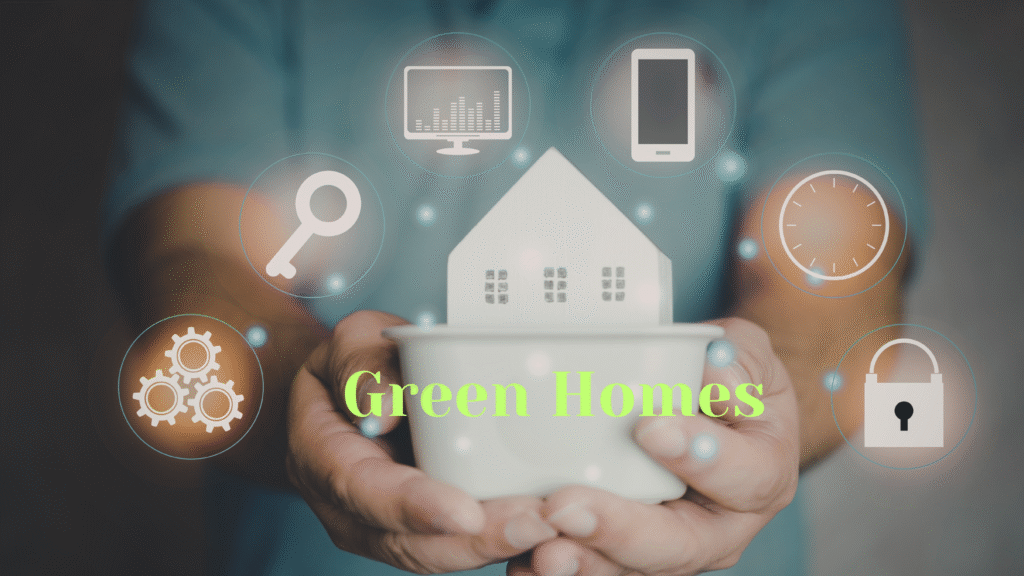
The term “smart home” used to mean a fridge that tells you when you’re out of milk. In 2026, smart home design is the central nervous system of sustainability. It’s about “Passive Intelligence”—systems that work in the background to save you money and energy without you having to lift a finger.
Energy Optimization
The core of an intelligent home is its ability to manage power. Smart grids integrated into residential designs can now predict weather patterns. If the system knows it will be a sunny afternoon, it will delay running your dishwasher until your solar panels are hitting peak production. This synergy between tech and nature is what defines a modern eco-friendly house.
Adaptive Lighting and Climate
Why heat a room no one is in? Advanced sensors now track occupancy and even the metabolic heat of residents to adjust HVAC systems in real-time. When paired with high-performance sustainable building materials, the energy required to maintain a comfortable temperature drops by up to 60%.
3. Designing for the Future: Eco Houses that Breathe
When we talk about eco houses, we often focus on the “outer shell.” However, the internal environment is just as vital.
Biophilic Integration
Human beings have an innate need to connect with nature. Modern smart home design incorporates biophilia by using automated skylights and internal irrigation systems for indoor gardens. These features don’t just look good; they naturally purify the air and regulate humidity.
4. Water Conservation: Every Drop Counts
An eco-friendly house in the current climate must be water-conscious. We are seeing a massive trend in “Greywater Smart Systems.” These systems take water from your showers and laundry, treat it using AI-monitored filtration, and reuse it for garden irrigation or toilet flushing.
By integrating these systems early in the design phase, homeowners can reduce their water footprint by nearly 40%. This is where the marriage of sustainable building materials (like permeable paving) and tech really shines.
5. The Financial Case for Eco-Friendly Living
Is it more expensive to build this way? Initially, yes. But the ROI (Return on Investment) has never been clearer. Eco houses built with sustainable building materials have significantly lower utility bills. Furthermore, the “Green Premium” in real estate is real. Properties with certified smart home design and high energy ratings are selling faster and at higher price points than traditional homes.
6. Overcoming the “Tech-Overload”
One common fear is that a smart home will feel “cold” or overly industrial. The 2026 trend is “Invisible Tech.” This means hiding the sensors and wires behind sustainable building materials like bamboo paneling or recycled stone. The goal is a home that feels organic and warm but functions with digital precision.
Privacy and Security
In 2026, SEO and user trends show a high concern for data privacy. A truly “smart” design includes localized data processing. Your home’s data shouldn’t live in the cloud; it should stay within the walls of your eco-friendly house.
7. How to Start Your Journey
If you are planning a renovation or a new build, start with a “Fabric First” approach.
- Insulate: Use high-quality sustainable building materials.
- Orient: Design your home to take advantage of natural sunlight.
- Integrate: Layer in your smart home design elements to manage what the “fabric” cannot.
Conclusion: The New Standard
The transition to eco houses is no longer a niche movement for the ultra-wealthy. It is a necessary evolution. By combining the physical durability of sustainable building materials with the digital efficiency of smart home design, we are building more than just houses—we are building a future that can last.
An eco-friendly house is a gift to your future self and the planet. It’s time to stop choosing between comfort and conscience. In 2026, you can—and should—have both.